

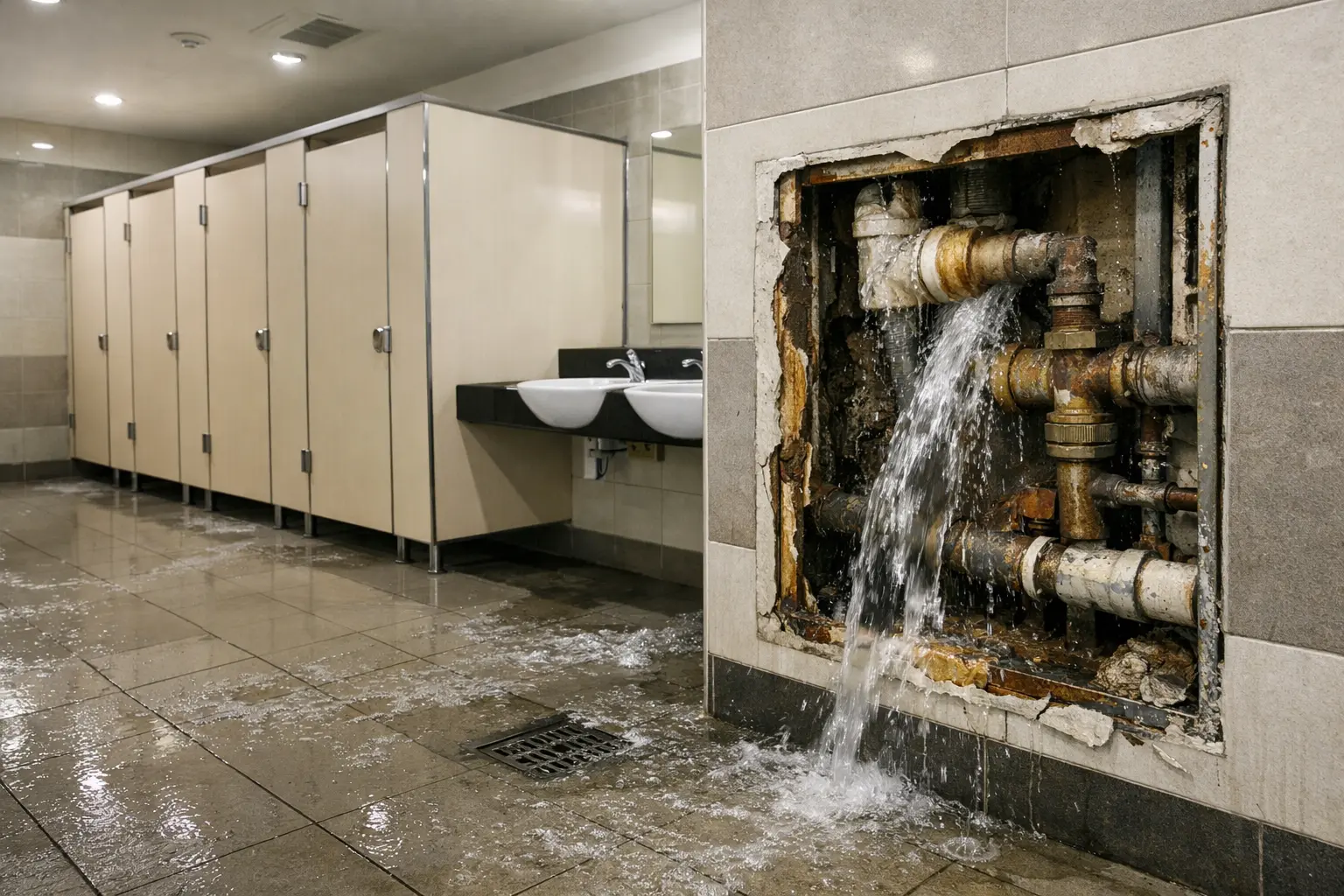
Public toilets and shared facilities such as those found in commercial buildings, transport hubs, and rest areas experience extremely high daily usage. Because of this heavy demand, plumbing systems in these facilities must be designed and maintained carefully to ensure consistent performance and hygiene.
When plumbing systems are poorly designed or inadequately maintained, problems can quickly arise. Issues such as clogged drains, water leakage, and low water pressure can disrupt facility operations and create unpleasant conditions for users. Understanding common plumbing problems helps facility managers identify issues early and maintain reliable building services.
Common Plumbing Issues in Public Toilets
Several plumbing problems frequently occur in public toilets and shared facilities due to high usage and operational stress on the system.
Clogged drainage pipes. Blocked drains are one of the most common issues in public toilets. Debris, paper products, and other foreign materials can accumulate in the drainage system, restricting water flow and causing slow drainage or backups.
Low water pressure. Inadequate water pressure can affect toilet flushing systems, faucets, and cleaning operations. This problem may result from undersized pipes, sediment buildup in pipes, or insufficient water supply to the facility.
Leaking pipes and fittings. Over time, pipe joints and fittings may loosen or deteriorate, causing leaks. Even small leaks can waste water and lead to long-term damage to surrounding building components.
Improper pipe sizing. Plumbing systems must be designed according to expected usage levels. If pipes are undersized for the volume of users, the system may struggle to handle peak demand, leading to frequent blockages or slow drainage.
Poor ventilation in plumbing systems. Proper ventilation is necessary to allow wastewater to flow smoothly through drainage pipes. Without adequate venting, negative pressure can occur within the system, causing unpleasant odors and drainage problems.
Causes of Plumbing Failures
Many plumbing issues in public facilities stem from a combination of design limitations and operational factors. Poor initial planning may result in pipe layouts that are difficult to maintain or unable to support high usage.
High user traffic also places significant strain on plumbing systems. Public toilets in locations such as rest areas, shopping complexes, and transportation facilities must handle large numbers of users throughout the day. Without robust infrastructure and routine maintenance, components may deteriorate more quickly.
Aging plumbing infrastructure can also contribute to system failures. Over time, corrosion, sediment buildup, and material degradation may affect pipe performance and lead to leaks or reduced water flow.
Importance of Proper Plumbing Design and Maintenance
Proper plumbing design plays a critical role in ensuring that public facilities remain clean, functional, and reliable. Adequate pipe sizing, well-planned drainage systems, and appropriate ventilation help maintain smooth wastewater flow and prevent frequent blockages.
Regular inspection and maintenance are equally important. Routine cleaning of drainage systems, prompt repair of leaks, and monitoring of water pressure can prevent minor issues from developing into larger problems that disrupt facility operations.
With proper design and consistent maintenance, plumbing systems in public facilities can support high usage while maintaining hygiene and user comfort. Investing in reliable plumbing infrastructure ultimately helps improve the overall performance and sustainability of building facilities.
If your facility requires professional repair or infrastructure upgrades, learn more about our Building Maintenance & Rehabilitation services and how we support reliable building systems and facility maintenance.