

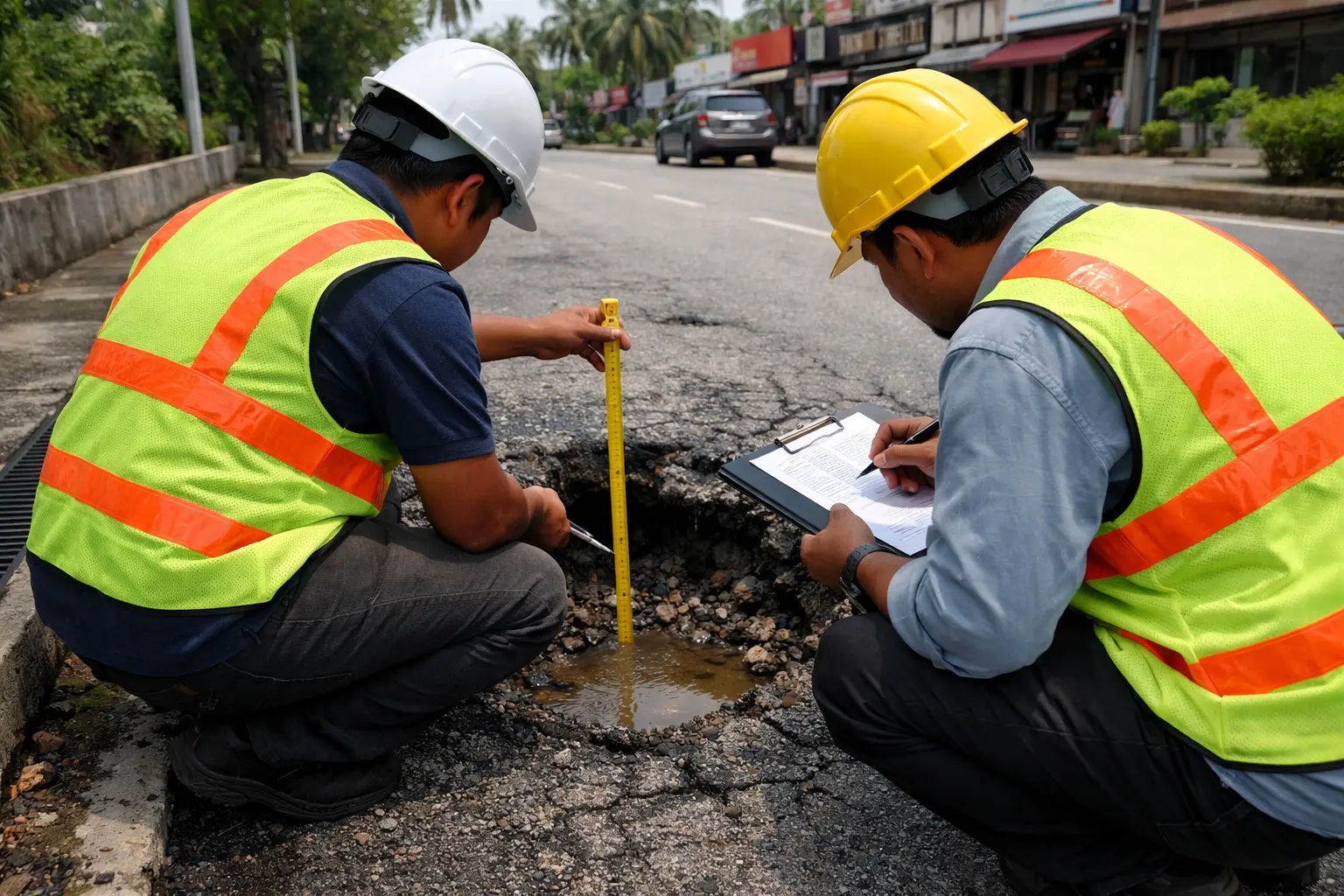
Potholes are one of the most common forms of road surface damage and can pose serious risks to vehicles and road users. They often appear as small cavities on the pavement surface but can quickly grow larger if not repaired promptly. In many cases, potholes develop gradually due to a combination of environmental conditions and repeated traffic loading.
Understanding how potholes form and how they are properly repaired helps road owners and property managers maintain safer and more durable road surfaces. Early identification and timely repairs are essential to prevent minor pavement defects from developing into more severe structural problems.
How Potholes Form
Potholes typically develop through a sequence of events that weaken the pavement structure. One of the primary causes is water infiltration. When water enters small cracks in the pavement surface, it penetrates the underlying layers of the road.
As moisture accumulates within the pavement structure, the supporting base layer gradually loses strength. When vehicles repeatedly pass over the weakened area, the pavement surface begins to break apart under pressure. Over time, small fragments of the road surface detach, forming a cavity that eventually becomes a pothole.
Temperature changes and heavy traffic can further accelerate this process. Once a pothole forms, it often expands quickly as vehicles continue to impact the damaged area.
Common Pothole Repair Methods
Several repair methods are commonly used to restore damaged pavement areas depending on the severity of the pothole and traffic conditions.
Cold mix asphalt patching. This method uses a ready-to-use asphalt mixture that can be applied quickly to fill potholes. It is often used for temporary repairs or emergency maintenance.
Hot mix asphalt repair. Hot mix asphalt provides a more durable solution by placing heated asphalt material into the prepared pothole and compacting it to restore the pavement surface.
Full-depth patch repair. When the damage extends beyond the surface layer, contractors may remove the damaged pavement and repair the underlying base layers before applying new asphalt. This method provides a longer-lasting repair.
Choosing the appropriate repair method depends on the extent of the damage, traffic conditions, and the structural condition of the surrounding pavement.
Importance of Timely Road Repairs
Prompt pothole repair is essential to maintain safe and reliable road conditions. If potholes are left unattended, they can expand rapidly and lead to more extensive pavement deterioration. Larger potholes also increase the risk of vehicle damage and accidents.
Regular road inspections and early maintenance interventions help prevent potholes from spreading across larger sections of the pavement. By addressing surface defects early, road owners can reduce long-term repair costs and extend the lifespan of the road infrastructure.
If your roads are showing signs of pothole formation or surface deterioration, professional repair works can restore pavement integrity and improve road safety. Learn more about our Road Maintenance & Repair services and how we support durable road infrastructure.