

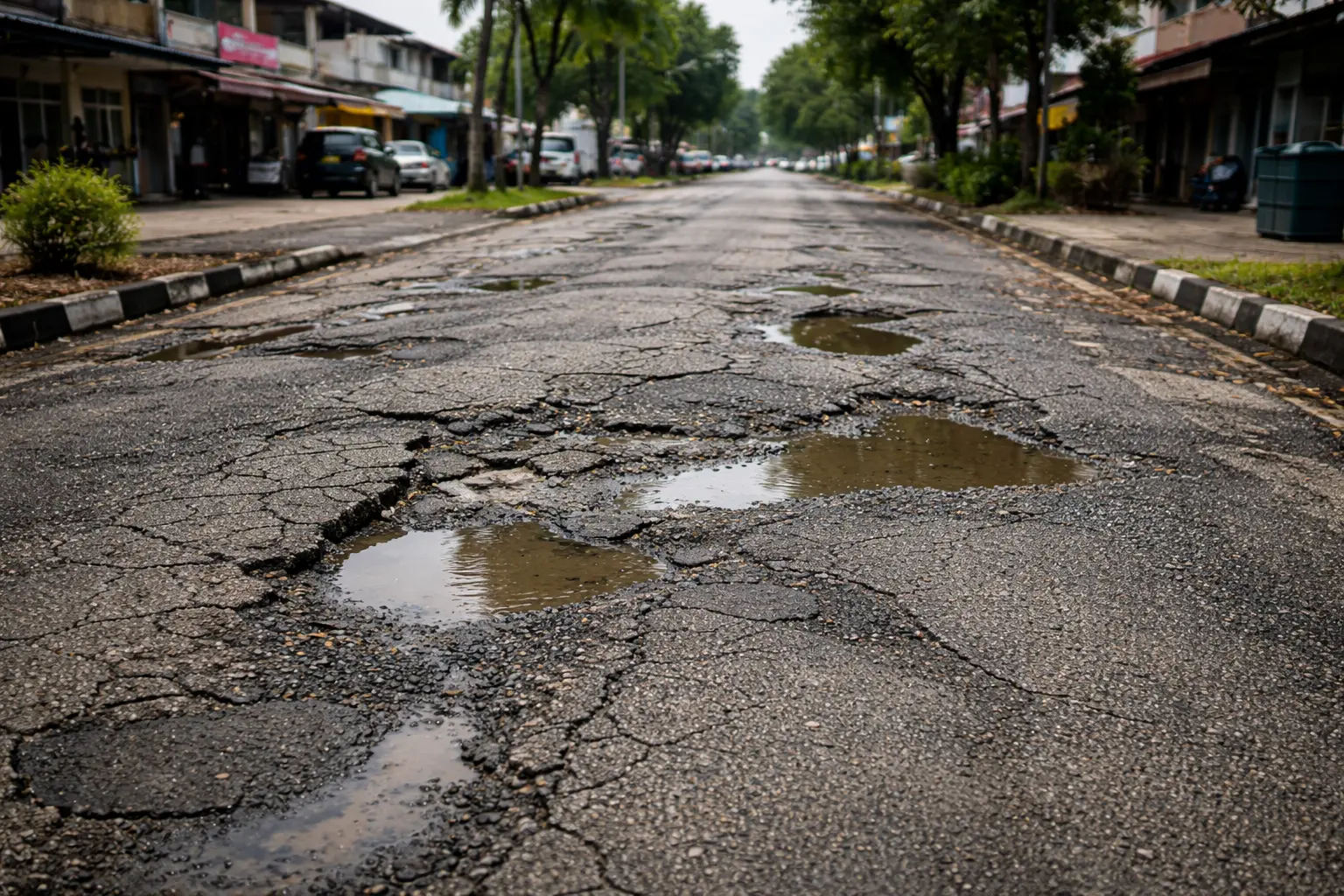
Road surfaces are exposed to continuous stress from traffic, environmental conditions, and natural aging. Over time, these factors can cause deterioration that affects both safety and performance. If road damage is not addressed early, small defects may quickly develop into more serious structural problems that require extensive and costly repairs.
Understanding the common causes of road surface damage allows property owners, facility managers, and local authorities to take preventive measures and maintain roads more effectively. Proper maintenance not only extends the lifespan of the pavement but also improves safety and reduces long-term maintenance costs.
Major Causes of Road Surface Damage
Road deterioration usually occurs due to a combination of environmental, structural, and operational factors. Identifying the root causes helps determine the most appropriate maintenance strategy.
Water infiltration and poor drainage. Water is one of the most damaging elements affecting road structures. When water penetrates through cracks or weak pavement areas, it can weaken the underlying base layers. Over time, the pavement loses its structural support, leading to surface deformation and pothole formation. Poor drainage systems often accelerate this process.
Heavy traffic loads. Roads that experience frequent heavy vehicle traffic are subject to repeated loading stresses. This constant pressure can cause fatigue in the pavement layers, eventually resulting in cracks, rutting, and surface deformation. Industrial zones and logistics routes are particularly vulnerable to this type of damage.
Poor construction or material quality. Inadequate compaction, weak subgrade preparation, or low-quality materials can significantly reduce the durability of a road surface. If proper construction standards are not followed during installation, the pavement structure may fail prematurely under normal usage conditions.
Temperature and weather effects. Asphalt and concrete materials expand and contract with temperature changes. Over time, this repeated movement can cause cracking and surface aging. Prolonged exposure to sunlight, rain, and fluctuating temperatures may accelerate the deterioration of road surfaces.
Common Types of Road Surface Damage
Different types of pavement damage can appear depending on the underlying causes. Recognizing these defects early allows maintenance works to be carried out before the damage spreads.
Potholes. Potholes occur when sections of the pavement surface break away due to weakened base layers or water infiltration. They are one of the most common road defects and can pose serious hazards to vehicles and pedestrians.
Surface cracking. Cracks often appear when the pavement experiences repeated stress or environmental exposure. If left untreated, cracks can allow water to enter the pavement structure and accelerate further deterioration.
Rutting. Rutting appears as depressions or grooves in the wheel paths of a road. This typically occurs due to repeated heavy traffic loads or insufficient structural support in the pavement layers.
Edge break. Edge break occurs when the outer edges of the road begin to crumble or collapse. This type of damage is often associated with poor shoulder support, erosion, or inadequate drainage along the roadside.
Preventive Measures and Maintenance Practices
Preventive maintenance plays a crucial role in prolonging the lifespan of road infrastructure. Addressing minor defects early can prevent more serious structural damage and significantly reduce repair costs.
Regular inspections help identify early signs of deterioration such as cracks or drainage problems. Routine crack sealing and patch repairs can prevent water from penetrating the pavement structure. In addition, maintaining proper drainage systems ensures that water does not accumulate on or beneath the road surface.
When the pavement begins to show signs of widespread wear, resurfacing works may be necessary to restore the road surface and improve its structural performance. Proper maintenance planning ensures that roads remain safe, functional, and durable for long-term use.
If your road surfaces show signs of deterioration, timely professional intervention is essential to prevent further damage. Learn more about our Road Maintenance & Repair services and how we can support your infrastructure maintenance needs.