

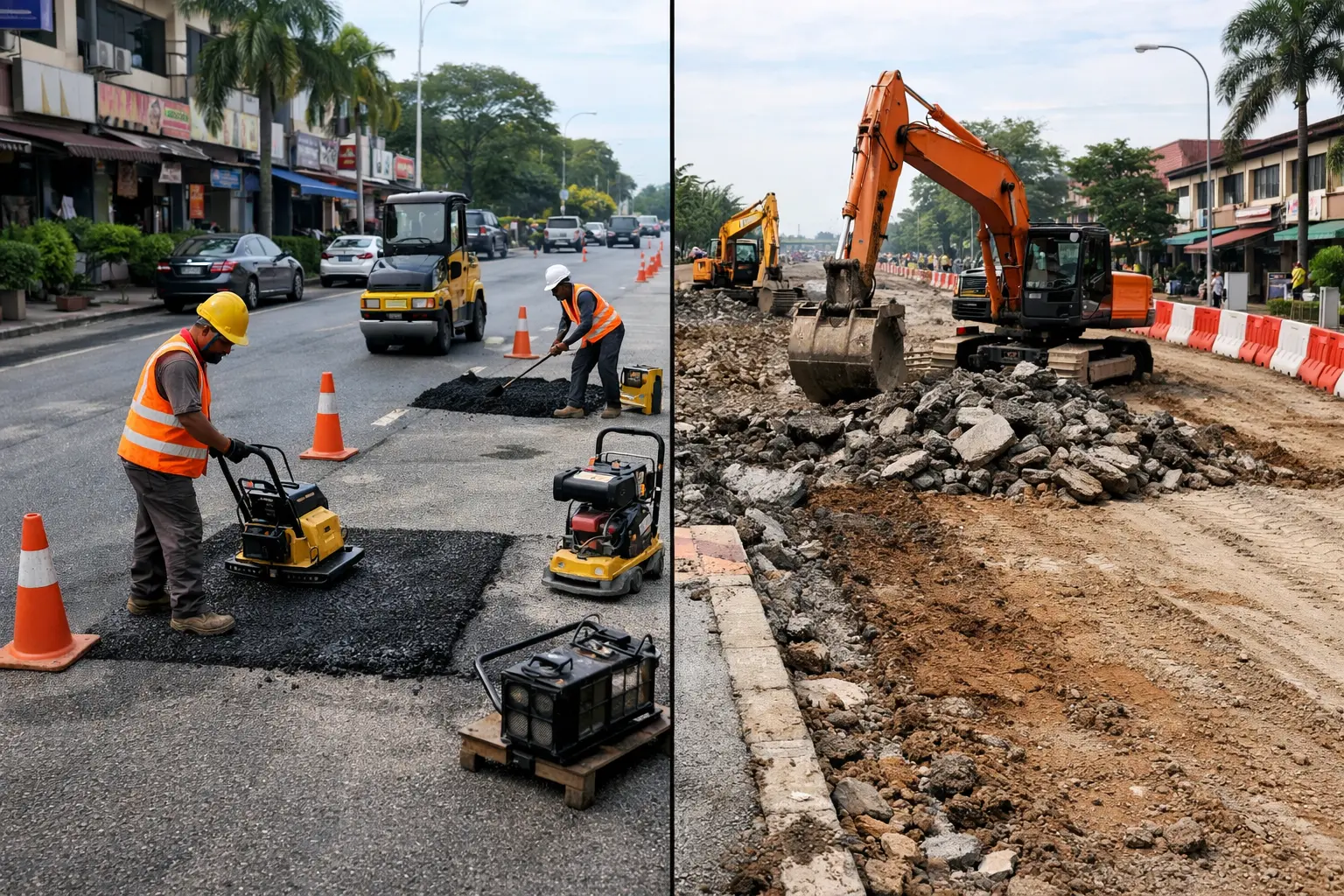
Road infrastructure requires continuous attention to remain safe, durable, and functional. Over time, road surfaces deteriorate due to traffic loading, weather conditions, water infiltration, and natural aging of construction materials. When signs of damage begin to appear, authorities and property owners must decide whether the road requires routine maintenance or full reconstruction.
Although both approaches aim to restore road conditions, road maintenance and road reconstruction involve very different levels of work, cost, and structural intervention. Understanding the difference between these two methods helps stakeholders make informed decisions that ensure long-term pavement performance.
What Is Road Maintenance?
Road maintenance refers to routine or preventive works carried out to preserve the condition of existing roads. The primary objective of maintenance is to address minor defects early before they develop into more serious structural problems.
Common road maintenance activities include pothole patching, crack sealing, surface patch repairs, drainage cleaning, and minor resurfacing works. These activities help maintain the structural integrity of the pavement while improving safety and ride quality for road users.
Preventive maintenance is often the most cost-effective strategy for managing road infrastructure. By repairing small defects early, the pavement structure can be preserved for a longer period, reducing the need for extensive and expensive rehabilitation works in the future.
What Is Road Reconstruction?
Road reconstruction is a more extensive process that involves rebuilding the road structure when the existing pavement has experienced severe deterioration or structural failure. In such cases, routine maintenance is no longer sufficient to restore the road’s performance.
Reconstruction typically involves removing the existing pavement layers and rebuilding the entire road structure from the base upwards. This may include reconstructing the subgrade, installing new base layers, and applying a new asphalt or concrete surface.
This method is usually required when the pavement has widespread cracking, severe rutting, base layer failure, or long-term structural damage caused by heavy traffic loads or poor drainage conditions. Because of the scope of work involved, road reconstruction generally requires higher costs and longer construction periods.
When Should Maintenance or Reconstruction Be Chosen?
The decision between maintenance and reconstruction depends largely on the condition of the road and the extent of structural damage. If the pavement structure is still stable and the damage is limited to surface defects, maintenance works such as patch repairs or resurfacing are often sufficient to restore the road condition.
However, when the pavement base has been compromised or the road surface shows widespread structural failure, reconstruction may be necessary to rebuild the road properly. Engineers typically assess factors such as pavement age, traffic loads, drainage conditions, and the severity of damage before recommending the appropriate solution.
In many cases, timely maintenance can significantly extend the lifespan of a road and delay the need for full reconstruction. Proactive maintenance planning is therefore essential to ensure infrastructure reliability while controlling long-term maintenance costs.
If your road surfaces are showing signs of deterioration, early professional assessment can help determine the most suitable repair approach. Learn more about our Road Maintenance & Repair services and how we can support your infrastructure maintenance needs.