
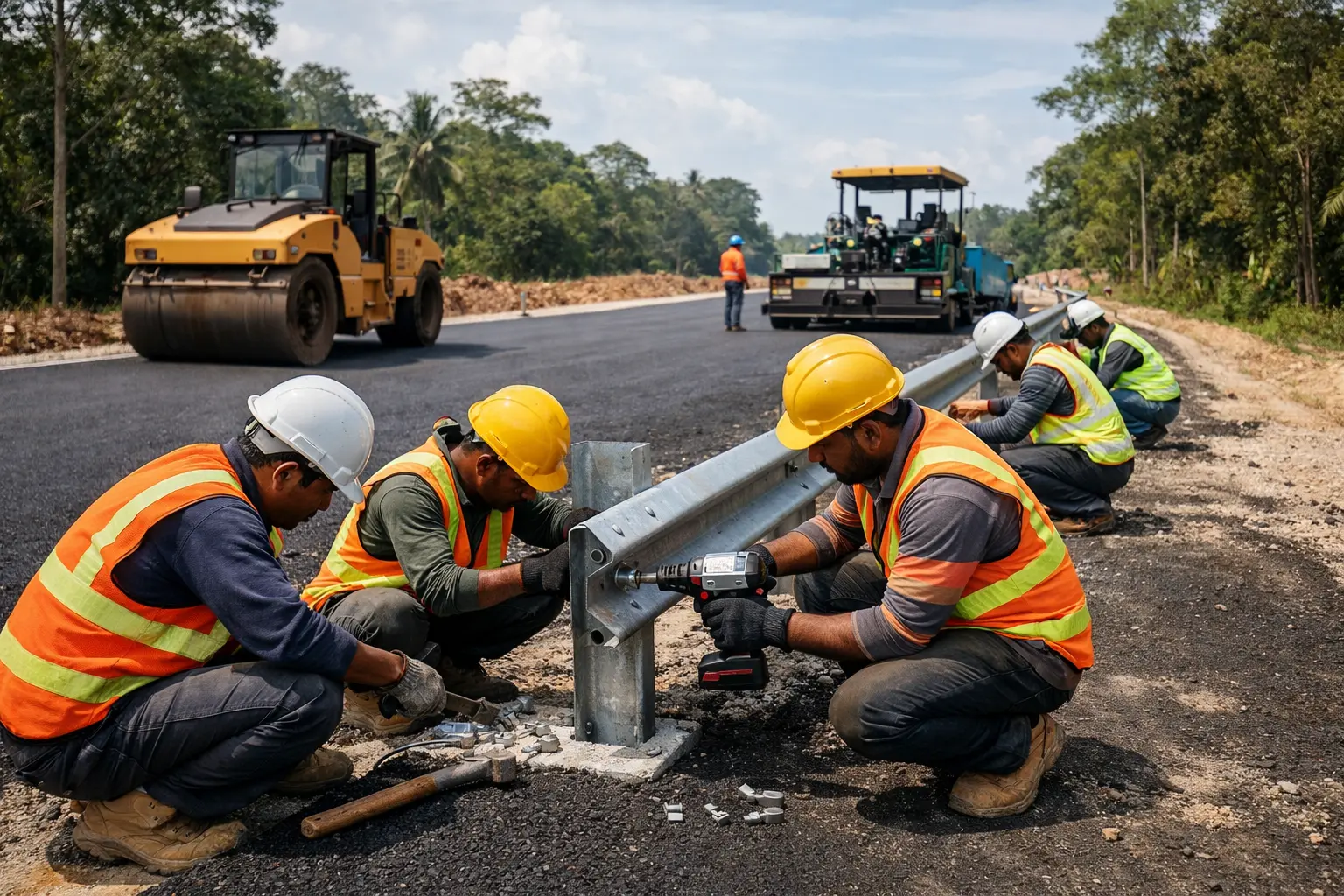
Road infrastructure includes more than just the pavement surface. Various supporting installations are required to guide traffic, improve visibility, and protect road users. These installations are collectively known as road furniture. Road furniture plays a crucial role in traffic management and road safety by providing clear guidance and physical protection for both motorists and pedestrians.
Properly designed and installed road furniture helps organise traffic flow, reduce accident risks, and improve the overall safety of road environments. From highways to urban streets and commercial premises, these safety elements are essential components of modern road infrastructure.
What Is Road Furniture?
Road furniture refers to equipment and safety devices installed along roads to assist drivers, regulate traffic movement, and protect road users. These installations are strategically placed to provide visual guidance, physical barriers, and traffic control functions.
Depending on the location and road type, road furniture can include signage, protective barriers, lane separators, reflective devices, and traffic calming installations. Each element serves a specific purpose in maintaining safe and orderly road conditions.
Common Types of Road Furniture
Several types of road furniture are commonly used to improve traffic safety and road organisation.
Road signs. Traffic signs provide essential information to drivers such as speed limits, warnings, directions, and regulatory instructions. Clear and visible signage helps road users make safe driving decisions.
Guardrails. Guardrails are protective barriers installed along road edges, bridges, and elevated sections to prevent vehicles from leaving the roadway. They are particularly important in areas with steep slopes or high traffic speeds.
Bollards. Bollards are vertical posts used to control vehicle access and protect pedestrians. They are often installed along walkways, building entrances, and pedestrian zones to prevent vehicles from entering restricted areas.
Lane dividers and road studs. Lane dividers and reflective road studs help guide drivers, especially during low visibility conditions such as nighttime or heavy rain. These devices improve lane discipline and enhance road visibility.
Traffic calming devices. Speed humps, rumble strips, and other traffic calming installations are used to reduce vehicle speed in sensitive areas such as residential zones, school zones, and commercial areas.
The Role of Road Furniture in Road Safety
Road furniture contributes significantly to road safety by providing clear visual cues and physical protection. Properly placed installations help drivers maintain lane discipline, recognise hazards early, and adjust their driving behaviour accordingly.
For example, reflective devices improve night-time visibility, while guardrails help prevent vehicles from leaving the road during emergencies. Traffic calming devices also help control vehicle speed in areas where pedestrian safety is critical.
In addition to improving safety, road furniture also helps organise traffic flow and create more structured road environments. This is particularly important in urban areas where traffic volumes and pedestrian activities are high.
Importance of Proper Installation and Maintenance
For road furniture to function effectively, it must be installed correctly and maintained regularly. Poorly installed or damaged road safety equipment may fail to provide adequate protection and could even create additional hazards.
Proper installation ensures that road furniture is positioned at the correct height, spacing, and orientation according to recognised safety standards. Regular inspections are also necessary to ensure that installations remain visible, stable, and functional over time.
If you are planning to improve road safety or install traffic management equipment, professional installation ensures reliable performance and long-term durability. Learn more about our Road Furniture Installation services and how we support safer road infrastructure.