
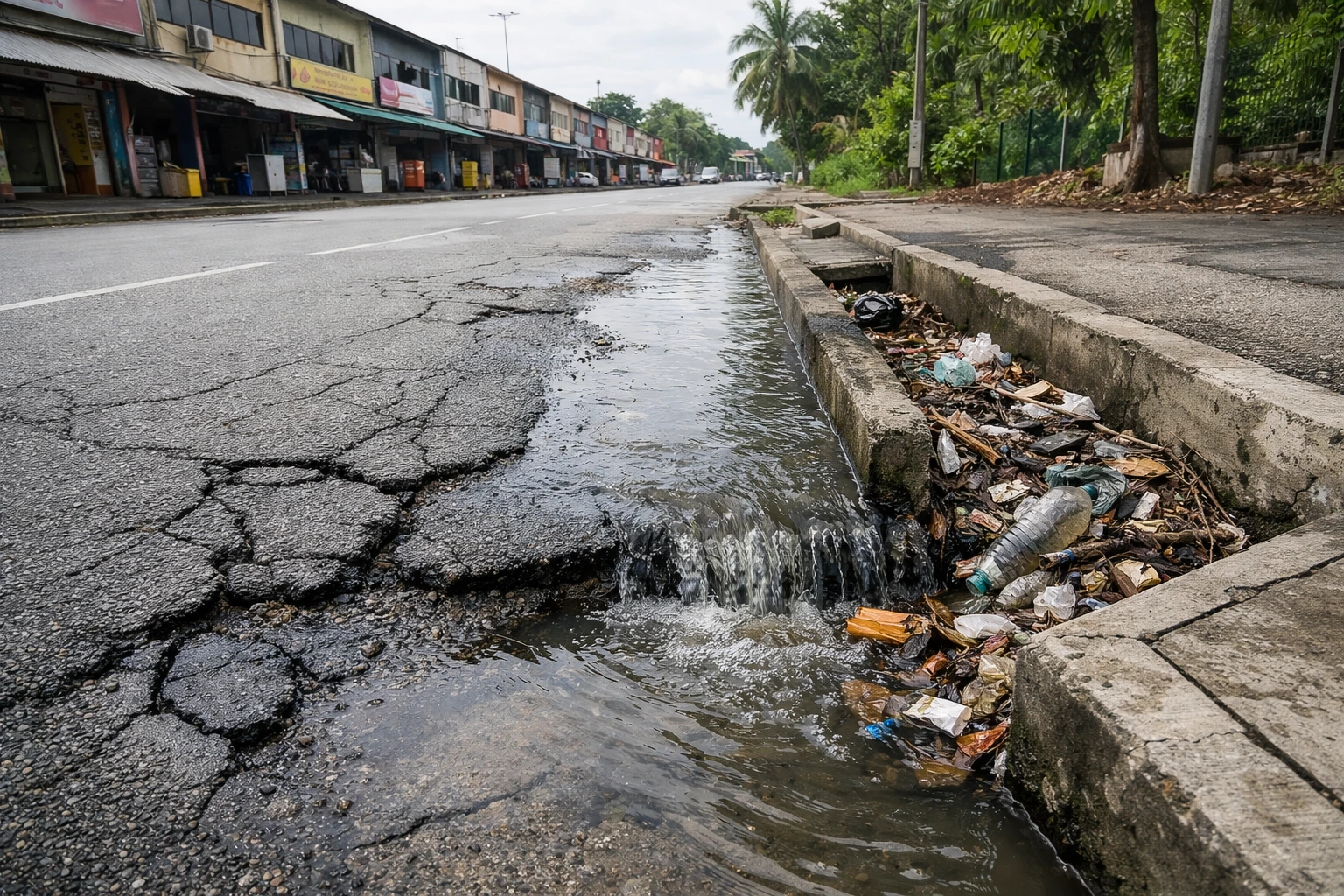
Water is one of the most significant factors affecting the durability of roads and infrastructure. Without proper drainage systems, rainwater can accumulate on road surfaces or penetrate underlying soil layers, gradually weakening the structural integrity of pavements and surrounding structures. Over time, poor drainage can lead to serious damage that requires costly repairs or reconstruction.
Effective drainage management is therefore a critical component of civil infrastructure planning. When drainage systems function properly, water is safely directed away from road surfaces and foundations, helping preserve the stability and lifespan of the infrastructure.
Common Drainage Problems
Several drainage-related issues can affect roads, buildings, and surrounding infrastructure. These problems often develop gradually but can cause significant damage if not addressed early.
Clogged drainage systems. Drainage channels and roadside drains may become blocked by debris, sediment, leaves, or waste materials. When drains are clogged, water cannot flow properly and may accumulate on road surfaces or nearby land areas.
Poor surface runoff design. Roads and paved areas must be designed with appropriate slopes to allow water to flow toward drainage points. If the surface gradient is insufficient or uneven, water may remain on the pavement surface and accelerate deterioration.
Blocked culverts and underground drains. Culverts and underground drainage pipes can become obstructed by sediment buildup or foreign objects. When this occurs, water flow is restricted and can cause localised flooding or erosion around the road structure.
Erosion caused by uncontrolled water flow. In areas where drainage is poorly controlled, flowing water can erode soil along road shoulders or embankments. This erosion weakens the support of the pavement structure and may eventually cause edge failures or surface collapse.
How Poor Drainage Damages Infrastructure
Poor drainage can significantly affect the structural performance of roads and other infrastructure elements. When water penetrates the pavement structure, it weakens the base layers that support the road surface.
As the base layers lose their strength, the pavement becomes more susceptible to cracking, rutting, and pothole formation. Repeated traffic loads can further worsen the situation, causing the road surface to deteriorate more rapidly.
In addition to pavement damage, uncontrolled water flow can also contribute to soil erosion and foundation instability. Over time, these conditions may compromise nearby structures such as walkways, retaining walls, and building foundations.
Preventive Measures and Maintenance
Proper drainage design and regular maintenance are essential to protecting infrastructure from water-related damage. During the planning stage, engineers must ensure that road surfaces have adequate slopes and that drainage systems are capable of handling expected water flow.
Routine inspections also play an important role in identifying potential drainage problems. Clearing debris from roadside drains, inspecting culverts, and repairing damaged drainage channels help maintain efficient water flow and prevent blockages.
When drainage systems are properly designed and maintained, roads and surrounding infrastructure can remain stable and durable for many years. Effective water management not only protects the pavement structure but also reduces long-term maintenance costs.
If you are experiencing drainage-related infrastructure issues, professional assessment and repair solutions can help restore proper water flow and prevent further damage. Learn more about our Civil Construction & Infrastructure Works and Road Maintenance & Repair services.