

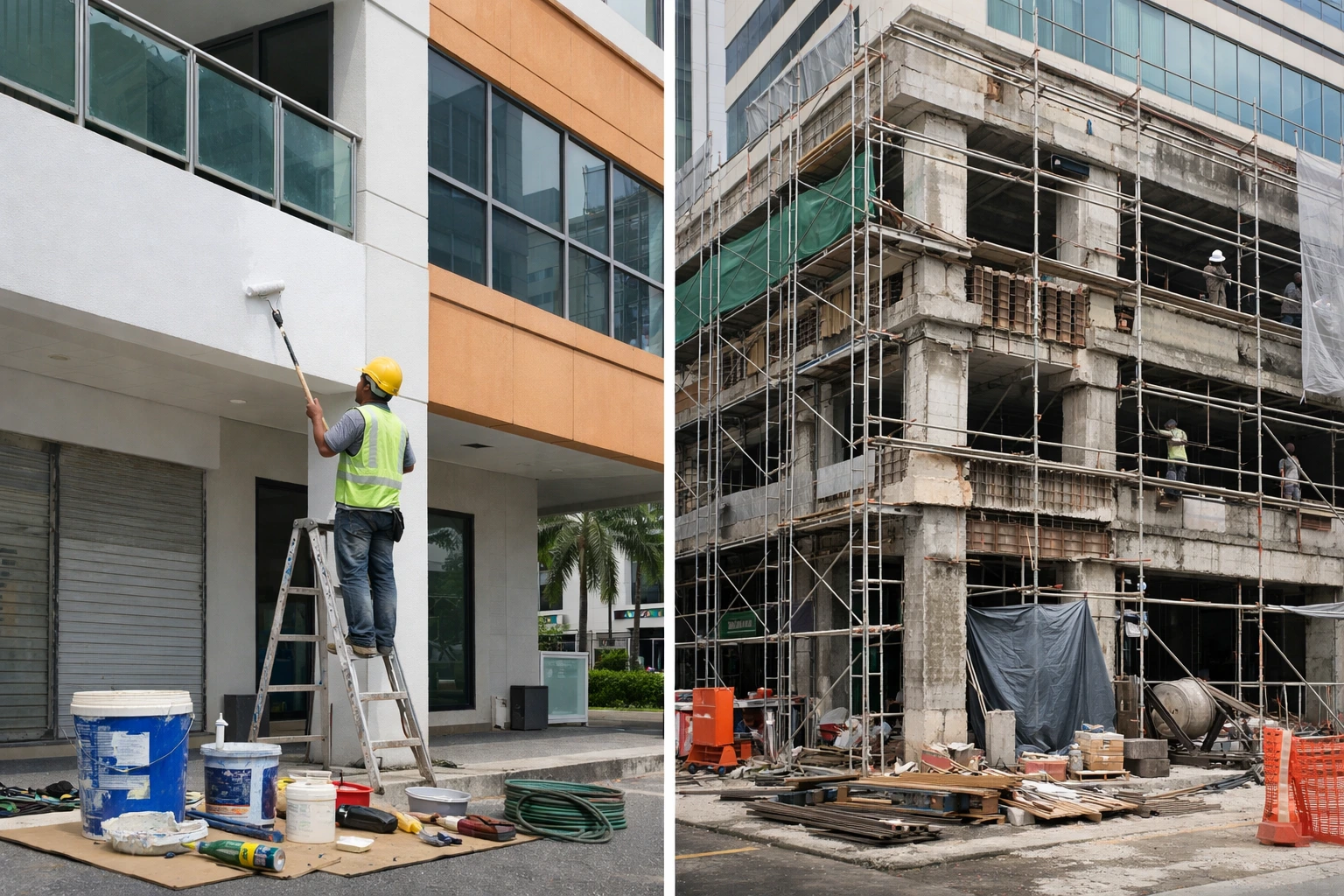
Buildings are constantly exposed to environmental conditions, aging materials, and daily operational use. Over time, these factors can lead to wear and deterioration that affect both the appearance and functionality of the structure. To ensure buildings remain safe and functional, property owners often carry out maintenance or rehabilitation works depending on the condition of the building.
Although these two terms are sometimes used interchangeably, building maintenance and building rehabilitation refer to different levels of intervention. Understanding the difference helps property owners and facility managers choose the most appropriate approach for preserving their buildings.
What Is Building Maintenance?
Building maintenance refers to routine activities carried out to keep a building in good working condition. The main objective of maintenance is to prevent deterioration and ensure that building components continue to function properly.
Typical building maintenance works include repainting surfaces, repairing minor cracks, servicing drainage and plumbing systems, waterproofing roofs or walls, and replacing worn fixtures. These activities help preserve the building’s appearance and prevent small issues from developing into major structural problems.
Regular maintenance is essential for extending the lifespan of building components and maintaining a safe environment for occupants. With proper maintenance planning, buildings can remain functional and visually appealing for many years.
What Is Building Rehabilitation?
Building rehabilitation involves more extensive repair or upgrading works that restore a building after significant deterioration has occurred. Rehabilitation projects usually address structural damage, aging infrastructure, or functional improvements needed to meet current standards.
Examples of rehabilitation works include repairing structural cracks, replacing damaged building components, restoring building facades, strengthening structural elements, or upgrading outdated building systems. These projects often require detailed planning and technical assessment before implementation.
Unlike routine maintenance, rehabilitation focuses on restoring or improving the building’s structural integrity and overall performance when normal maintenance is no longer sufficient.
When Is Rehabilitation Necessary?
Rehabilitation becomes necessary when a building shows signs of serious deterioration or when key components have reached the end of their service life. Indicators may include extensive cracking, persistent water leakage, structural weakening, or major façade damage.
In older buildings, rehabilitation may also be required to improve safety standards, restore architectural features, or adapt the building for new functional requirements. Addressing these issues through rehabilitation helps preserve the value of the property while ensuring that the building remains safe for continued use.
In many cases, regular maintenance can delay the need for major rehabilitation works. By identifying problems early and carrying out preventive repairs, property owners can significantly reduce long-term repair costs.
If your property requires professional repair or improvement works, early assessment can help determine the most suitable solution. Learn more about our Building Maintenance & Rehabilitation services and how we support reliable building upkeep.